
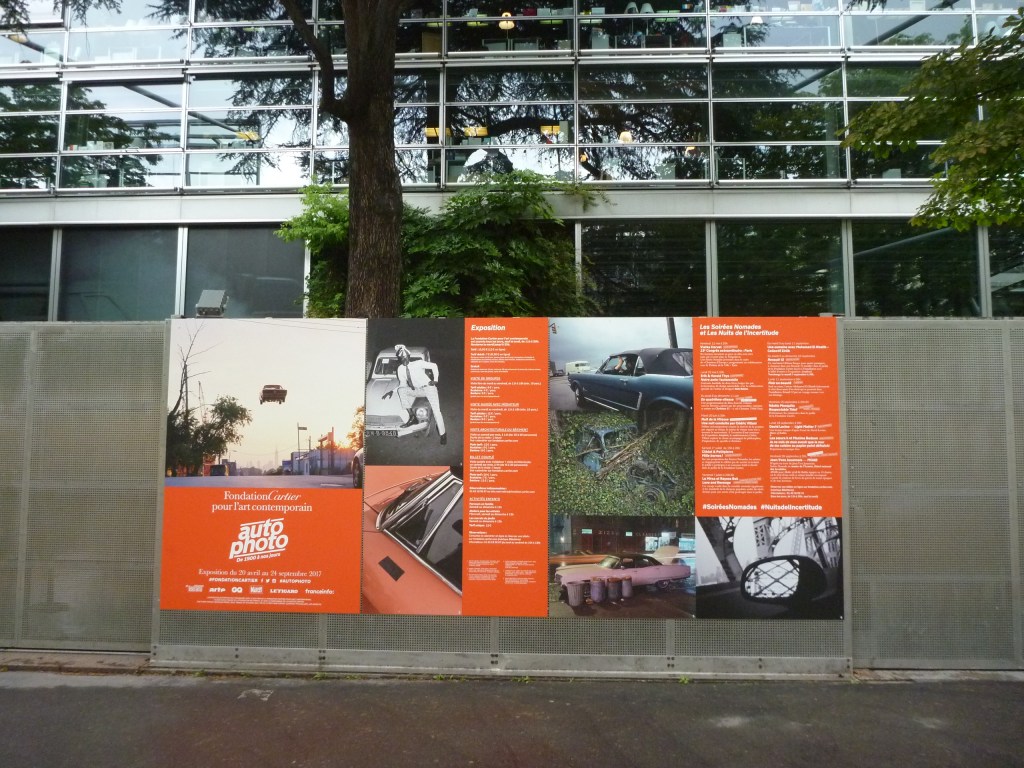
As the name suggests, the Fondation Cartier pour l’art contemporain, exhibits a wide array of contemporary art, usually staging two to three large exhibitions a year. This summer, photography and cars are the themes for the exhibition AutoPhoto. As summer shows go, it’s a big, well-planned and excellently curated exhibition, featuring a diverse range of international photographers and video artists.
The foundation building has three levels – the ground floor and basement are exhibition spaces with a mezzanine-level gift shop. Above the gallery are six levels of office space. If you want to read more about the architecture – which itself is quite amazing – you can read more here: https://www.fondationcartier.com/en/building.
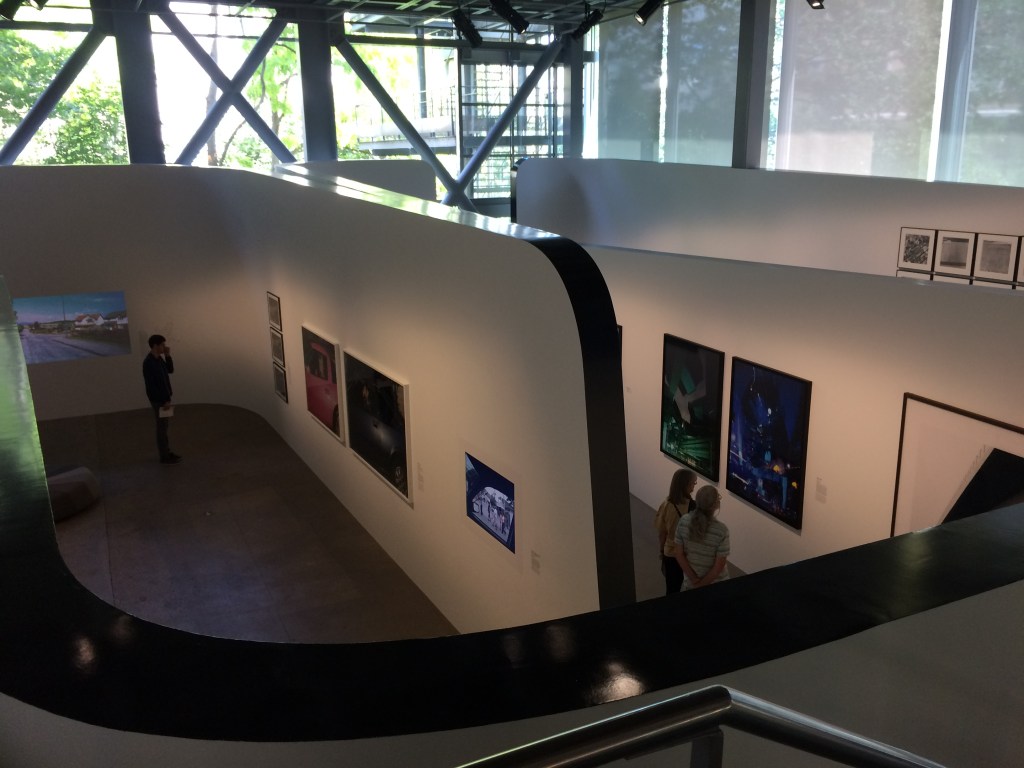
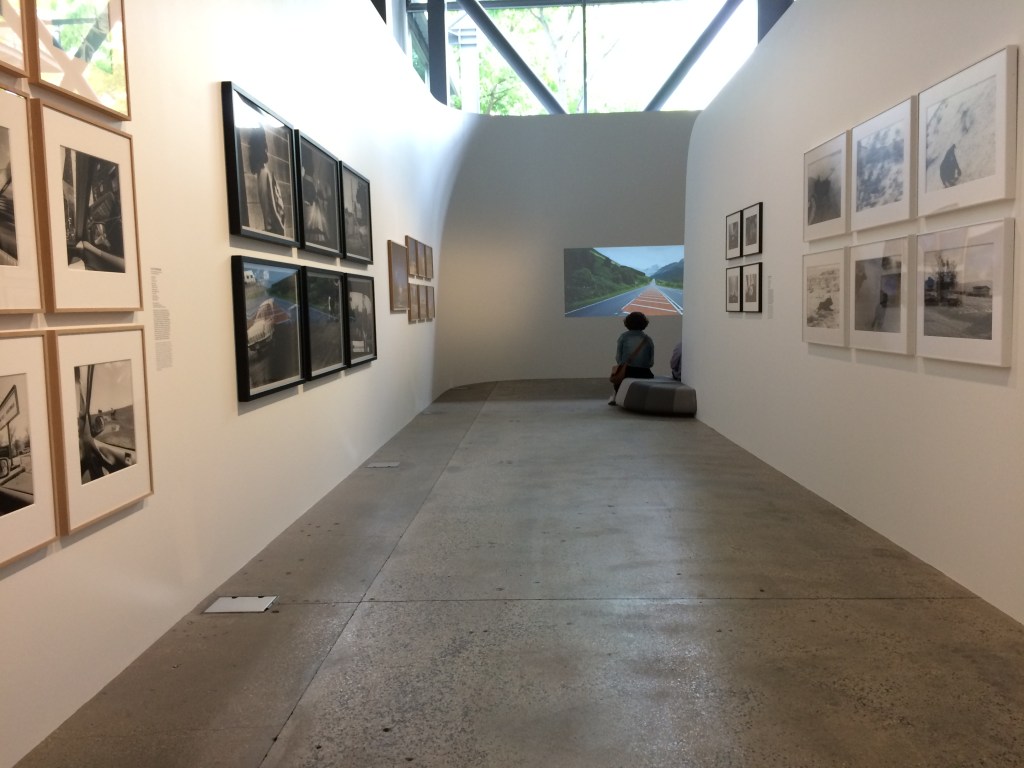
Left-hand side gallery space, looking away from the entrance, and below, looking towards the entrance.
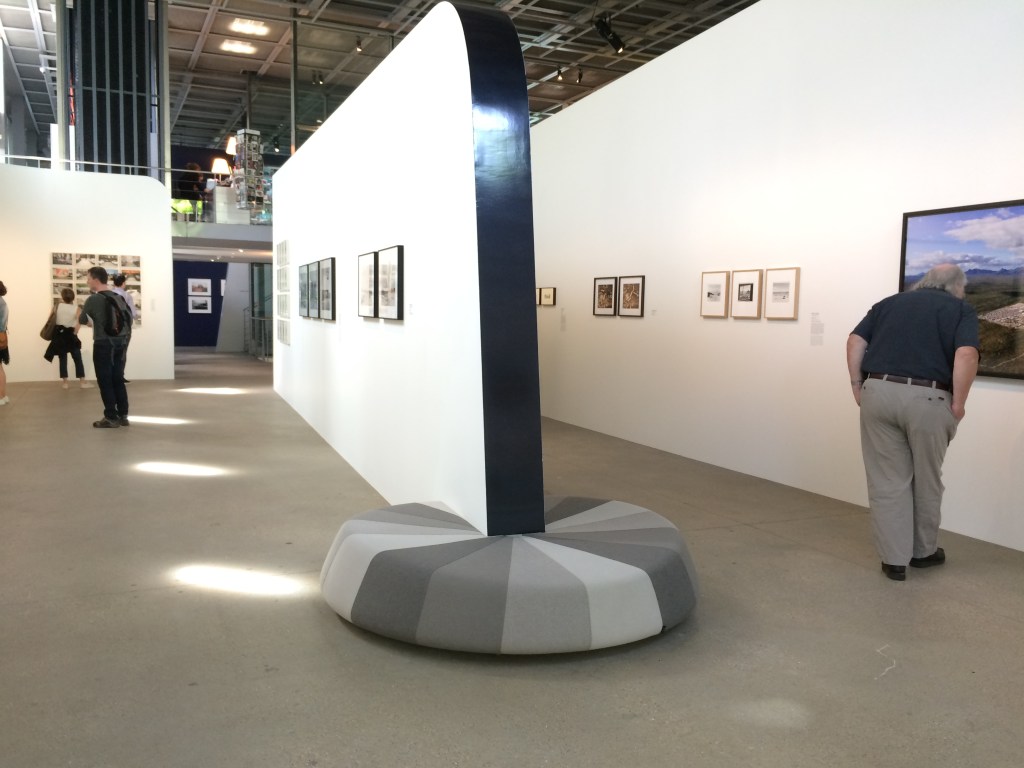
The ground floor was a classic white wall gallery space with dark blue text. At the entrance, there was a small dark blue-walled, box gallery space featuring older light-sensitive works and backlit display cases for transparencies. Creating smaller spaces, in a somewhat light-filled space is a great way to keep light levels low for older works.
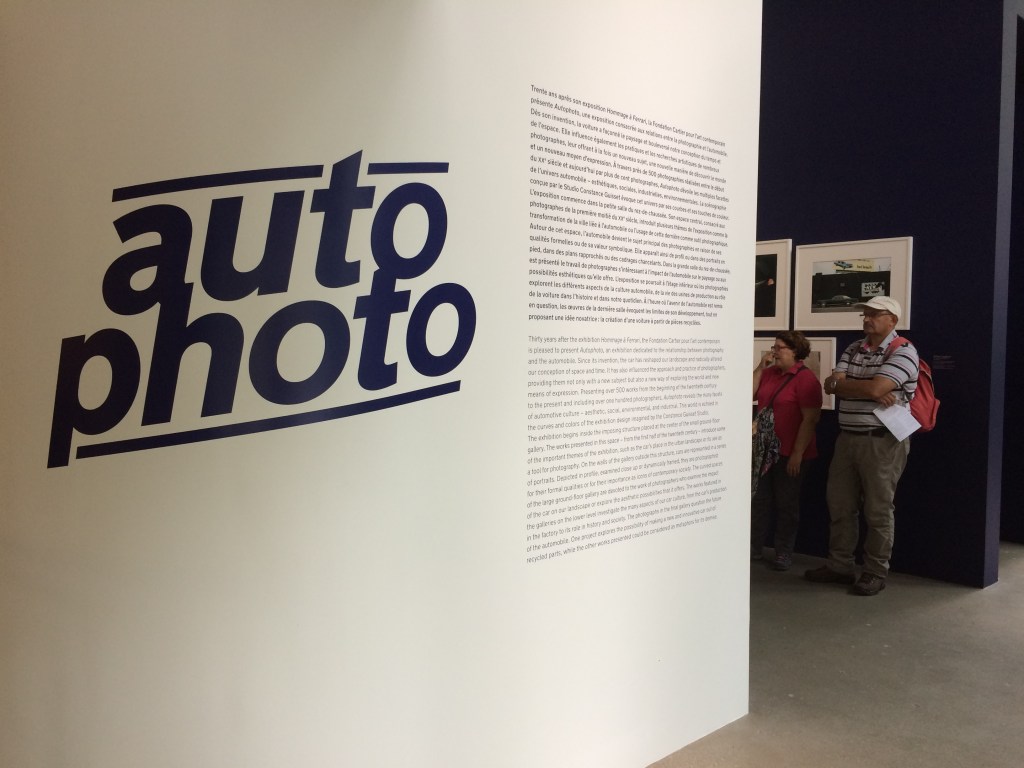
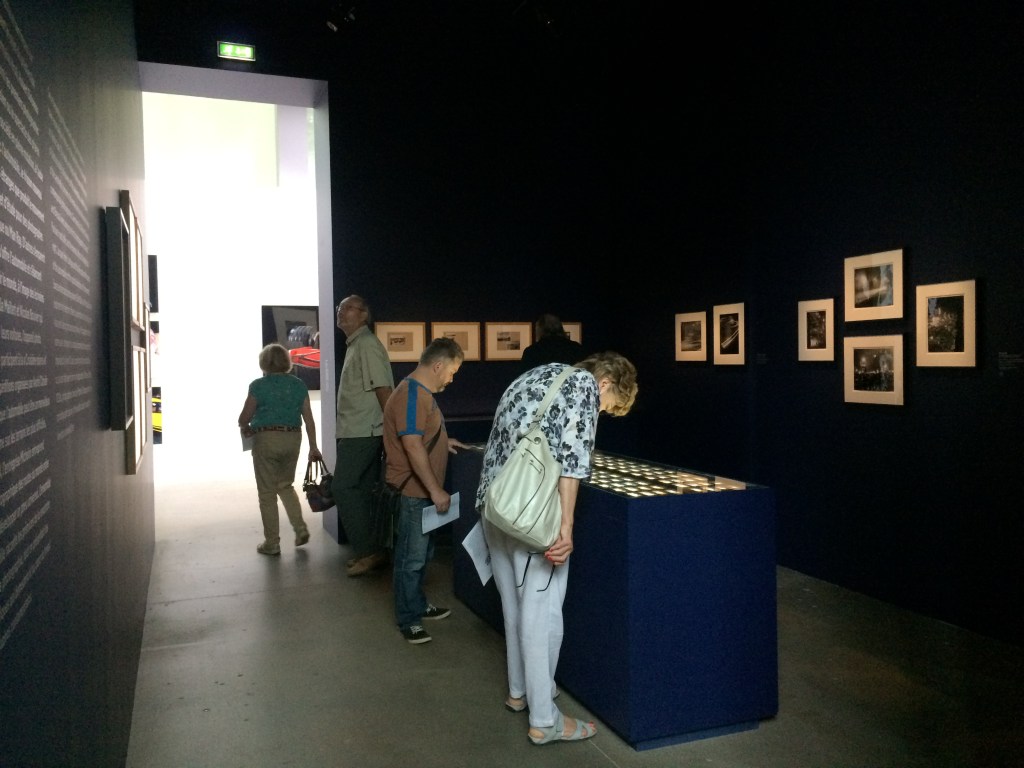
The exhibition was broken into six sections. On the ground floor, there were four sections – Autophoto, Paving the Way, Auto-Portraits and Photomobile Landscapes. The basement level featured The lives of the Automobile and Car Excavations. The exhibition featured mainly two-dimensional works, mixed with projections and a small section with classic car design drawings and models on plinths. All the wall text was in French, with room brochures available in English.
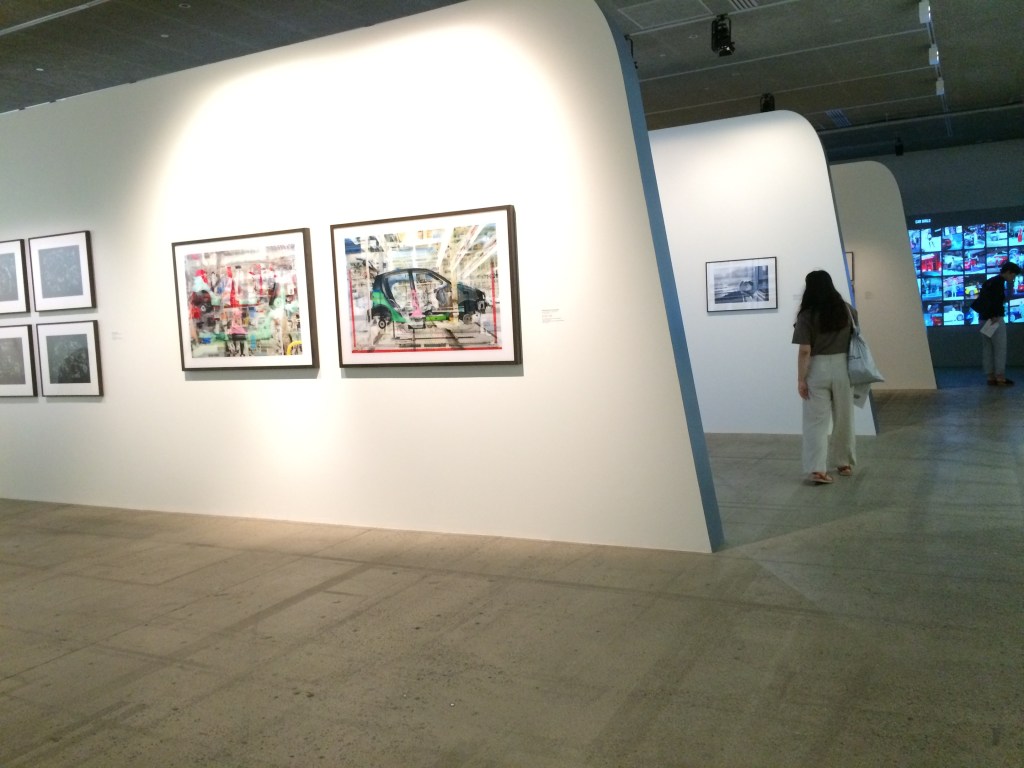
The basement gallery spaces.
Visitor Flow
As a general rule, visitors will go where they want, but it’s possible to try to make them follow following a path. There are unwritten museum rules about clockwise flow, which this exhibition followed, right up until the middle of the ground floor. The natural path was to walk straight ahead into the left-hand side space, but according to the titles on the wall, visitors were supposed to go back to the main entrance and recommence on the left-hand side before heading downstairs.
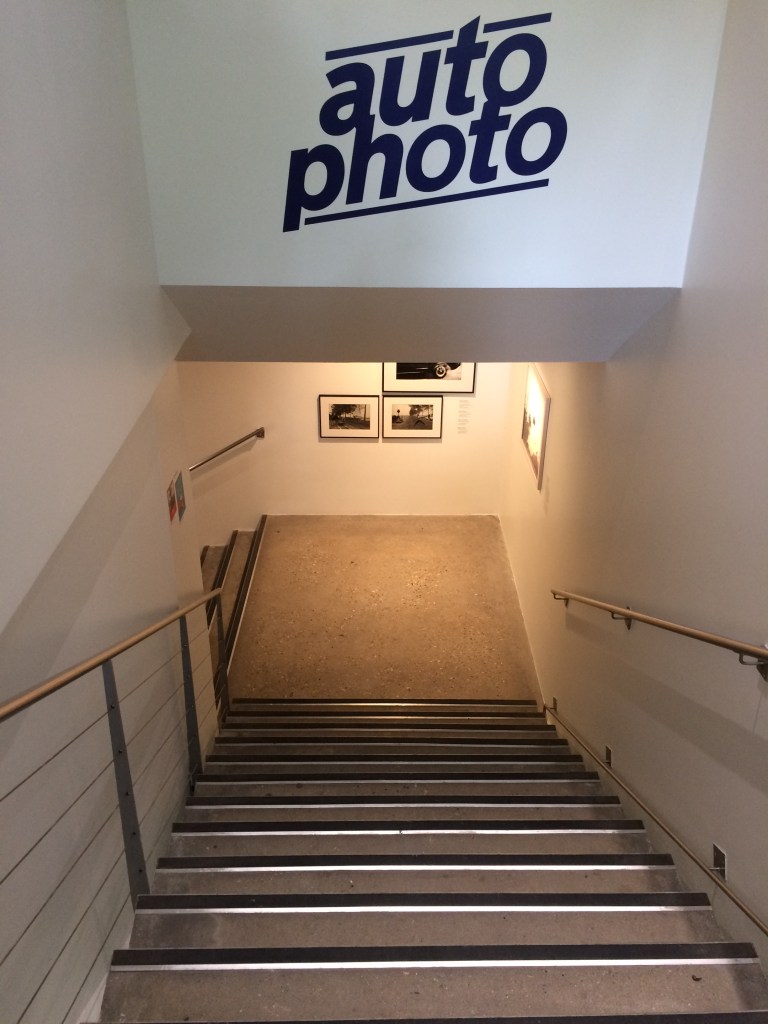
For most people, this isn’t a problem, but for me, I always struggle when I realise halfway through a section that I’m going the wrong way. Do I continue? Or do I stop and go back to the beginning, the way the curators and designers intended the exhibition to be viewed?
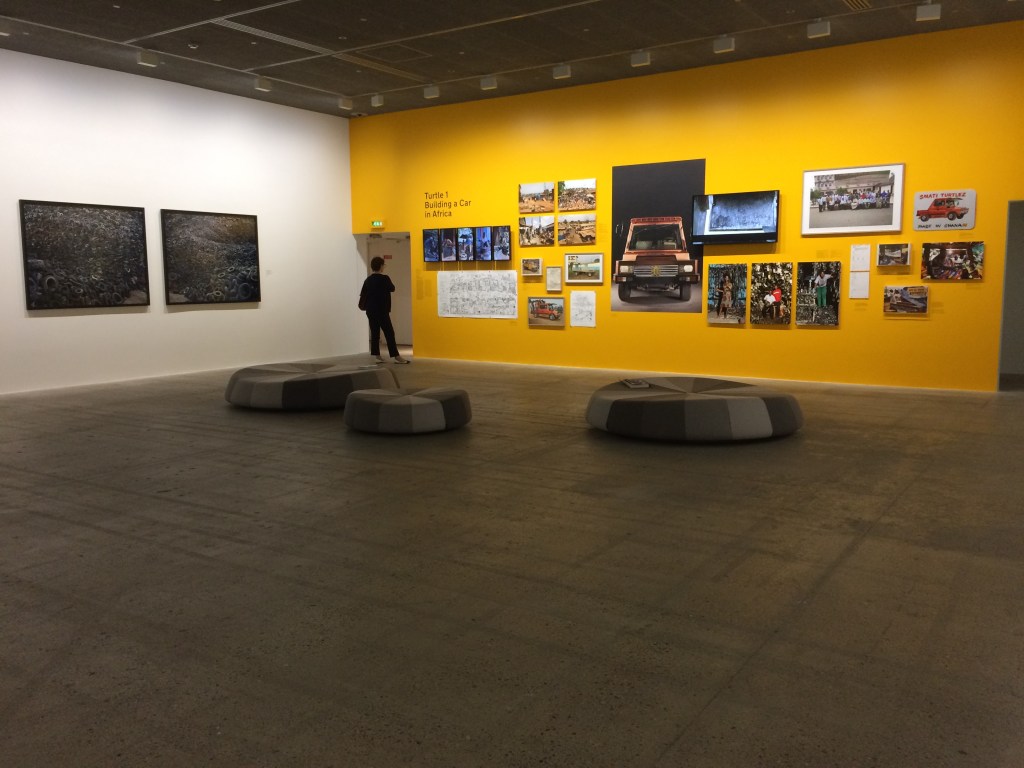
On the basement level, at the end of the exhibition, there was one yellow wall titled Turtle 1: Building a Car in Africa. I thought it was a continuation of the exhibition, the content fits nicely with the theme of Auto Photo. The bright yellow wall should’ve been a big clue that it was a side project, along with the related book attached to the comfy seats. It was a nice sideline and great to see the recycling aspects of cars, but as Auto Photo was a big exhibition, by the time I got to the end, gallery fatigue was setting in, so I wasn’t entirely focused on the content.
No Photography
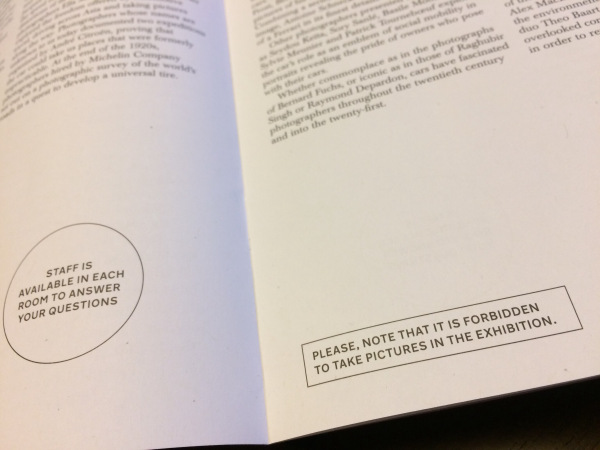
The room brochure said it was forbidden to take photographs. I saw other visitors taking photographs. I asked one of the staff members if photography was allowed. Yes, photography is allowed, unless there was a label beside a photograph or series that specifically said ‘No Photography’. Possibly due to some photographs being on loan from other institutions, a private lender or copyright issues associated with these works.
The Catalogue
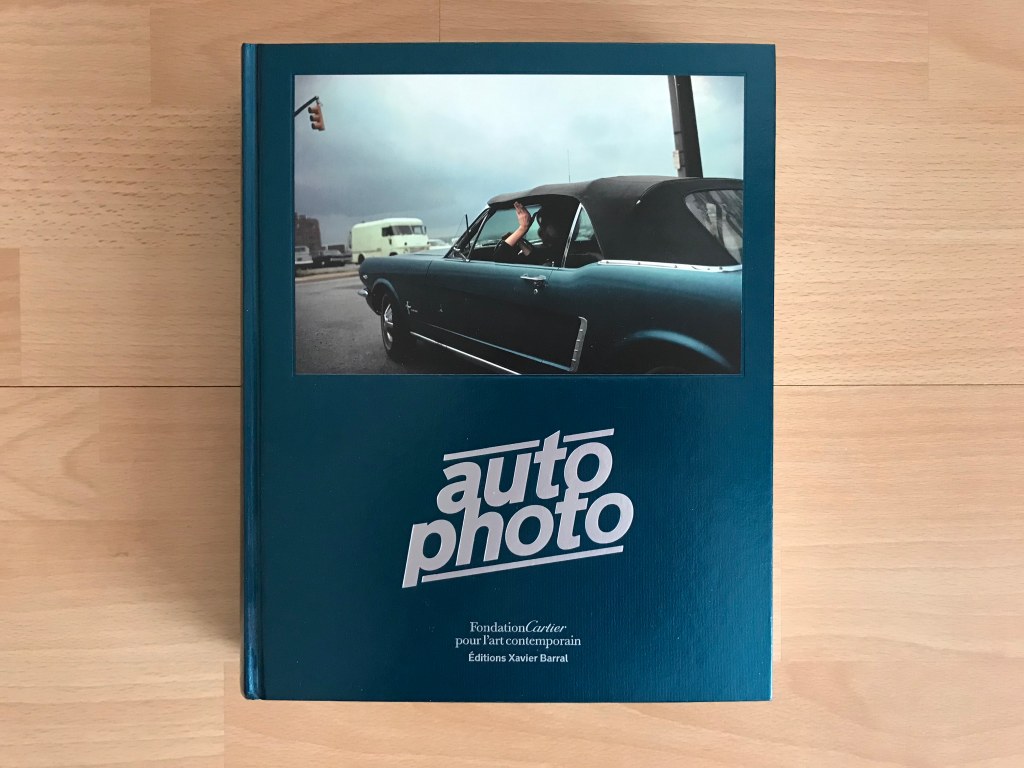
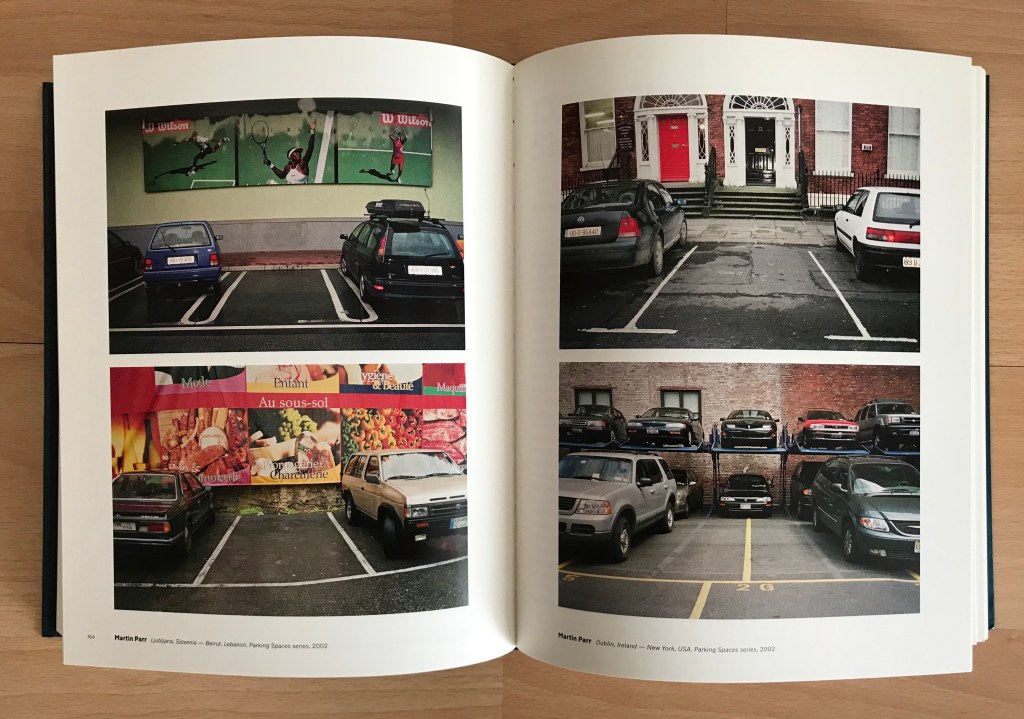
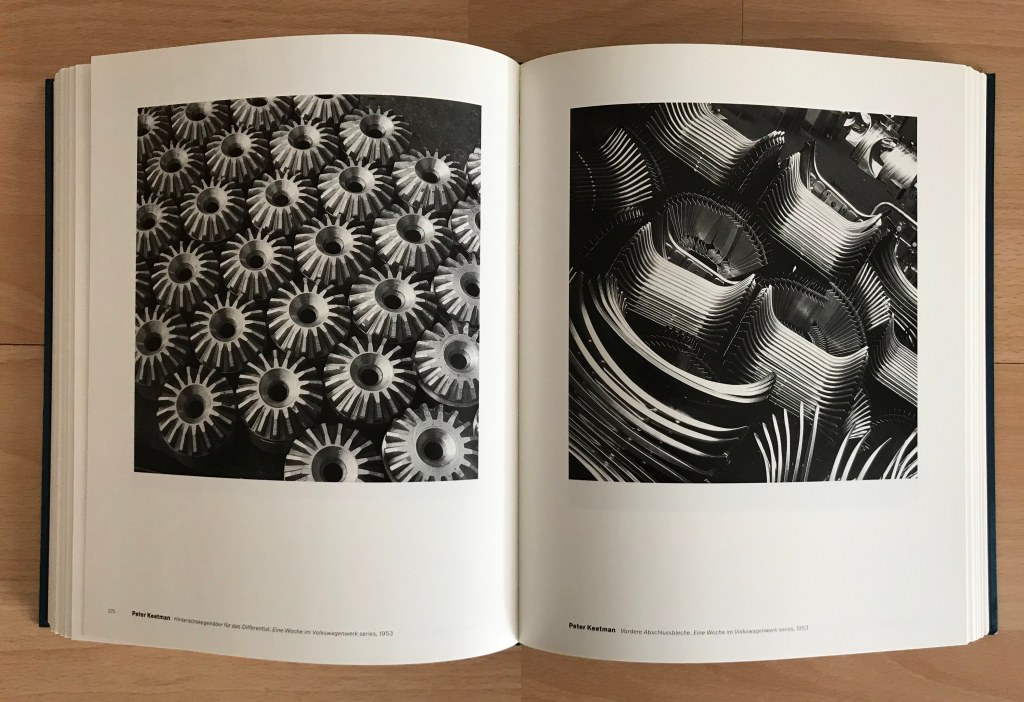
The catalogue is a mammoth 400-page, 5kg beast, but when I flicked through it in the gift shop, I knew it was a well-researched and a great compendium to the exhibition. It is also available in French and English – yes, there are two versions – I couldn’t pass it by.
If you’re planning a trip to Paris, I’d highly recommend adding Fondation Cartier pour l’art contemporain to your list of places to visit. Check their website for what’s on and opening hours. It is located on Boulevard Raspail in Montparnasse, and the closest Metro station is Raspail.
